CHERISH ; To hold dear, protect and care for lovingly
“ to love, protect and care for someone or something important to you “.
The apt name of this joint exhibition with Hester Cox, printmaker, is to highlight the birds which we both cherish all of which can be found on the red and amber lists of the Birds of Conservation Concern 5 and Category 1 and 2 of the Nature Recovery Plan for the YDNP.
They are birds which we are still lucky enough to see or listen out for on a daily basis in our respective parts of the Yorkshire Dales. .
Part of my research so far has involved reading and pouring over maps at home . What I have been looking for are clues . Bird names appear on North Yorkshire Dales maps and in The Cuckoo's Lea, Michael J. Warren goes in search of who and why were places named after birds. Using this book as a springboard for an idea, I have decided to concentrate my research on linking Yorkshire Dales National Park Category 2 birds to places; predominately in Swaledale and Wensleydale ,and to historical ages from Palaeolithic to modern ages.
The names of birds have changed over time and are also dependant on place and dialect, but the fact they were named at all meant that the birds were important and held a strong connection with humans at that time.
One such example is that of the Ring Ousel, Turdus torquatus(Linnaeus, 1758). Its classification name being derived from Latin, with “Turdus meaning "thrush" and torquatus meaning "collared" or "adorned with a necklace," directly referring to the male's distinct white crescent-shaped breast band.”
This summer migrant was seen in the high moor areas in northern England and
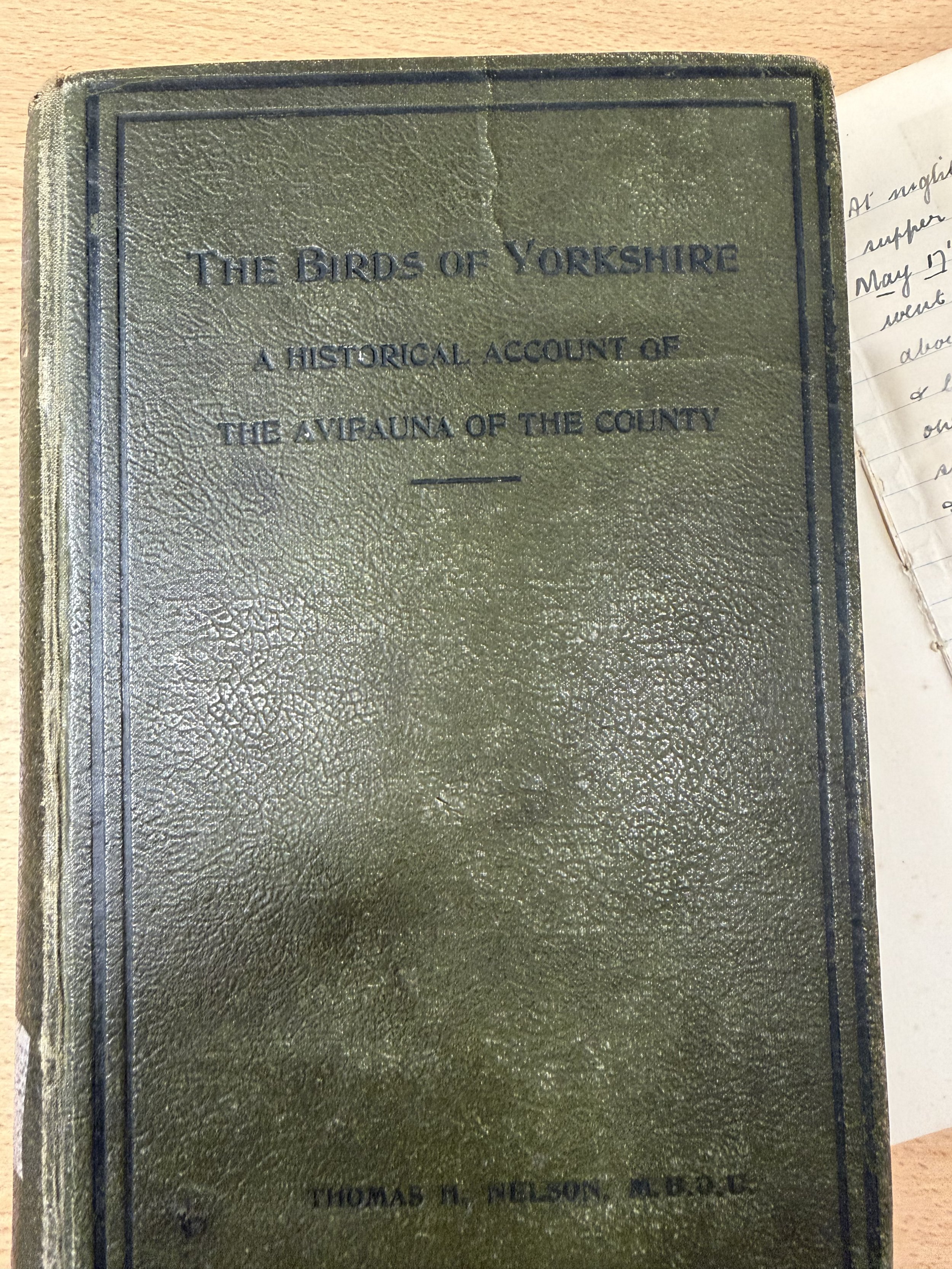
In the book The Birds of Yorkshire: A Historical Account of the Avifauna of the County
Thomas H. Nelson Published by A. Brown and Sons, Limited, London, 1907 the Ring Ousels
local names are as follows :—Heath Throstle (Craven
1676); Moor Thrush (Sedbergh); Crag Ouzel (Craven) ;
Moor Blackbird (Sheffield, Craven, and Scarborough) ;
Mountain Blackbird and Fell Blackie (Sedbergh); Ring Uzzle and Moor Blackie (Cleveland); Collared Blackie (Staithes); Rock Ouzel and Ring Whistle (Teesdale).
I am hoping to undertake further research into the origins of some birds names which will help to place them into a historical context, using Mrs Moreau's Warbler: How Birds Got Their Names Paperback – 4 April 2019 by Stephen Moss as a starting point.
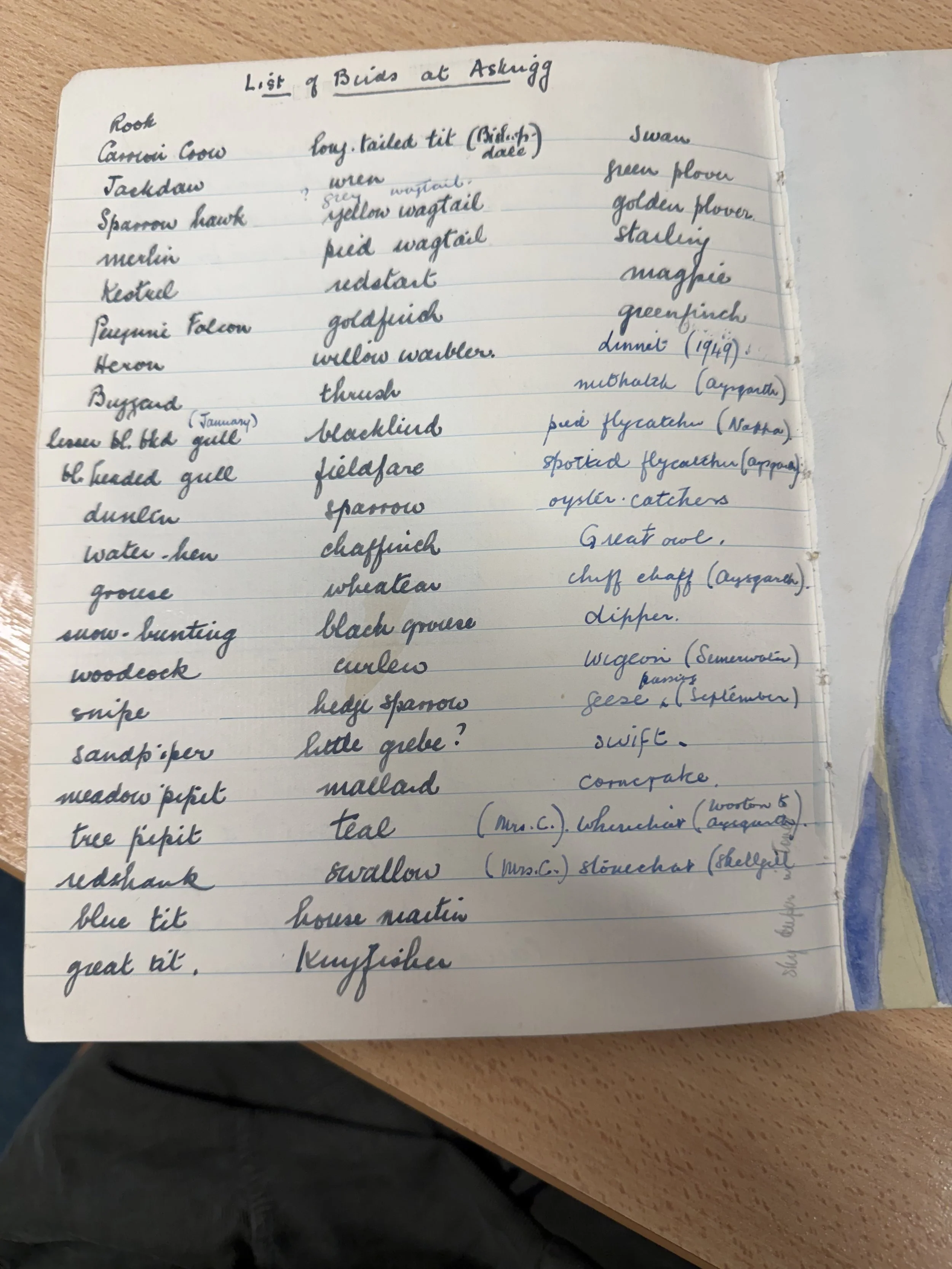
Using archive material from The Dales Countryside Museum in Hawes, I have also started looking at Marie Hartley’s 1936 Diary, and 1947 Diary . Having read the Wensleydale and Swaledale books written by Marie Hartley and Ella Pontefract ,I hoped to find some bird references in the original diaries and was lucky to find the same list which inspired Hester to use as her starting point.
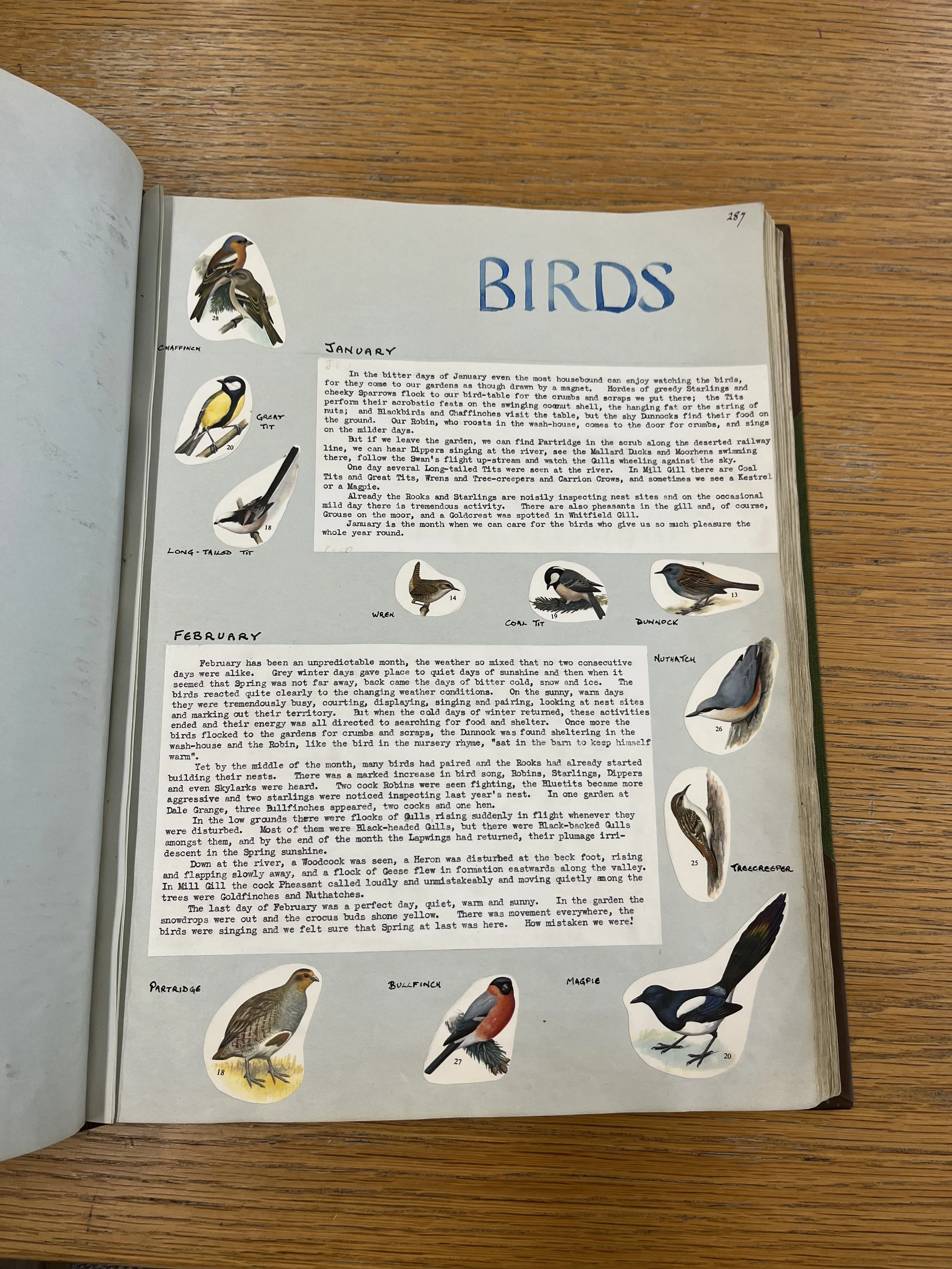
This list I have then cross referenced with the The Askrigg yearbooks of 1965 and 2014/2015 which gave super descriptions of species seen around Askrigg and these linked back to Marie Hartley’s 1947 list perfectly .
The final quote of the Askrigg 2014-2015 bird section reads ;
“If some future enthusiast repeats this exercise, maybe in 2065,for a new Village
Book, maybe some of our species will no longer be here, and others will have replaced them. Who knows”
Askrigg Book 2014-2015
A sobering thought indeed.