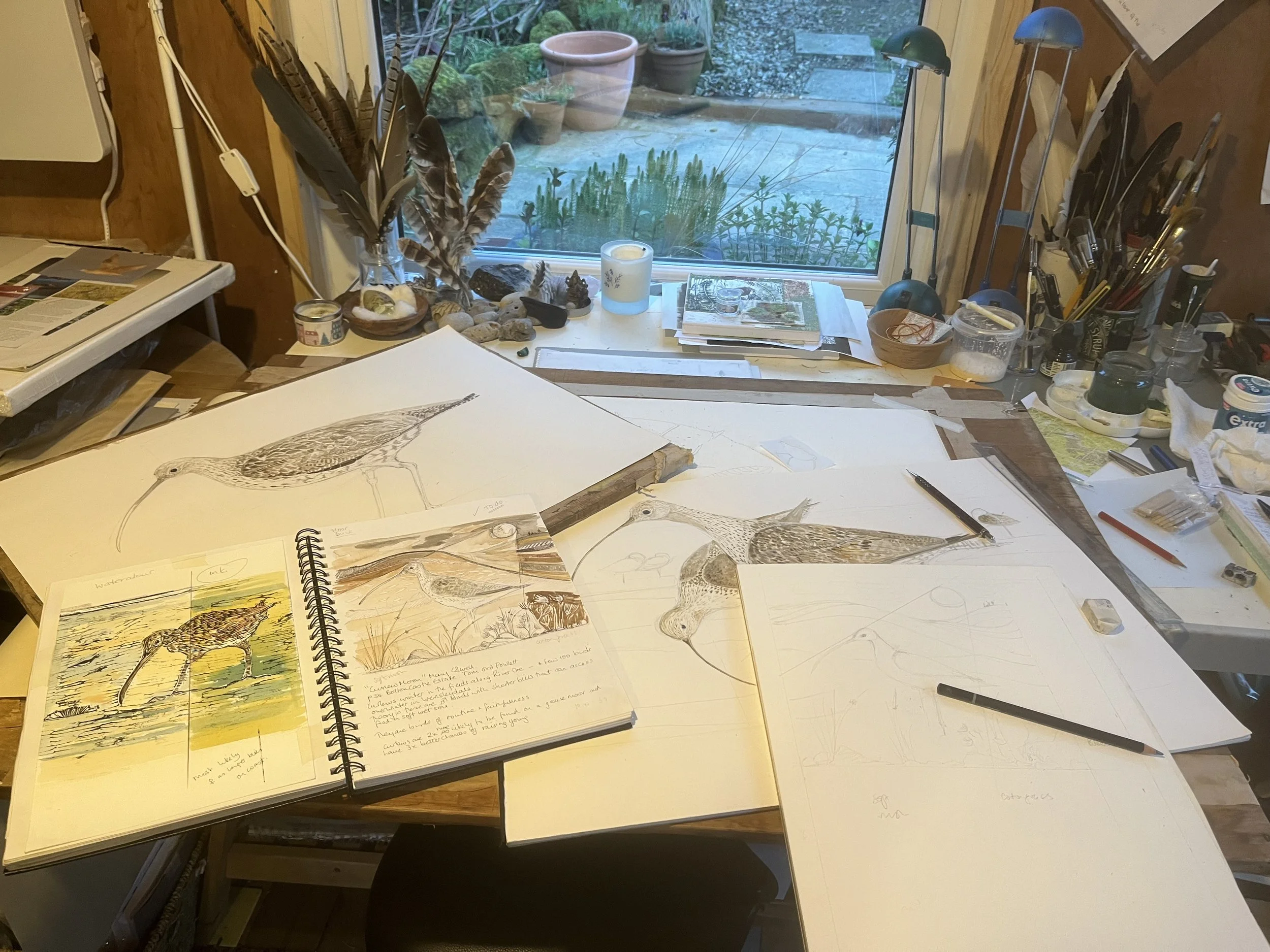
I have always had a fascination with birds. I enjoyed watching them as a child and I became a member of the Young Ornithologists Club and wrote an article on wrens roosting in one of our nestboxes. Over 30 of them I recall. I still have the article somewhere. I have also loved drawing and painting. My creativity started early with my first painting of Noah’s Ark being chosen for a local exhibition from school aged about 6 or 7 ! Then came a picture of a flying squirrel for an Animal Magic competition . I still have the letter and book as a runner up prize. My first lino cut was aged 8 or 9 at home with mum . I was so lucky.
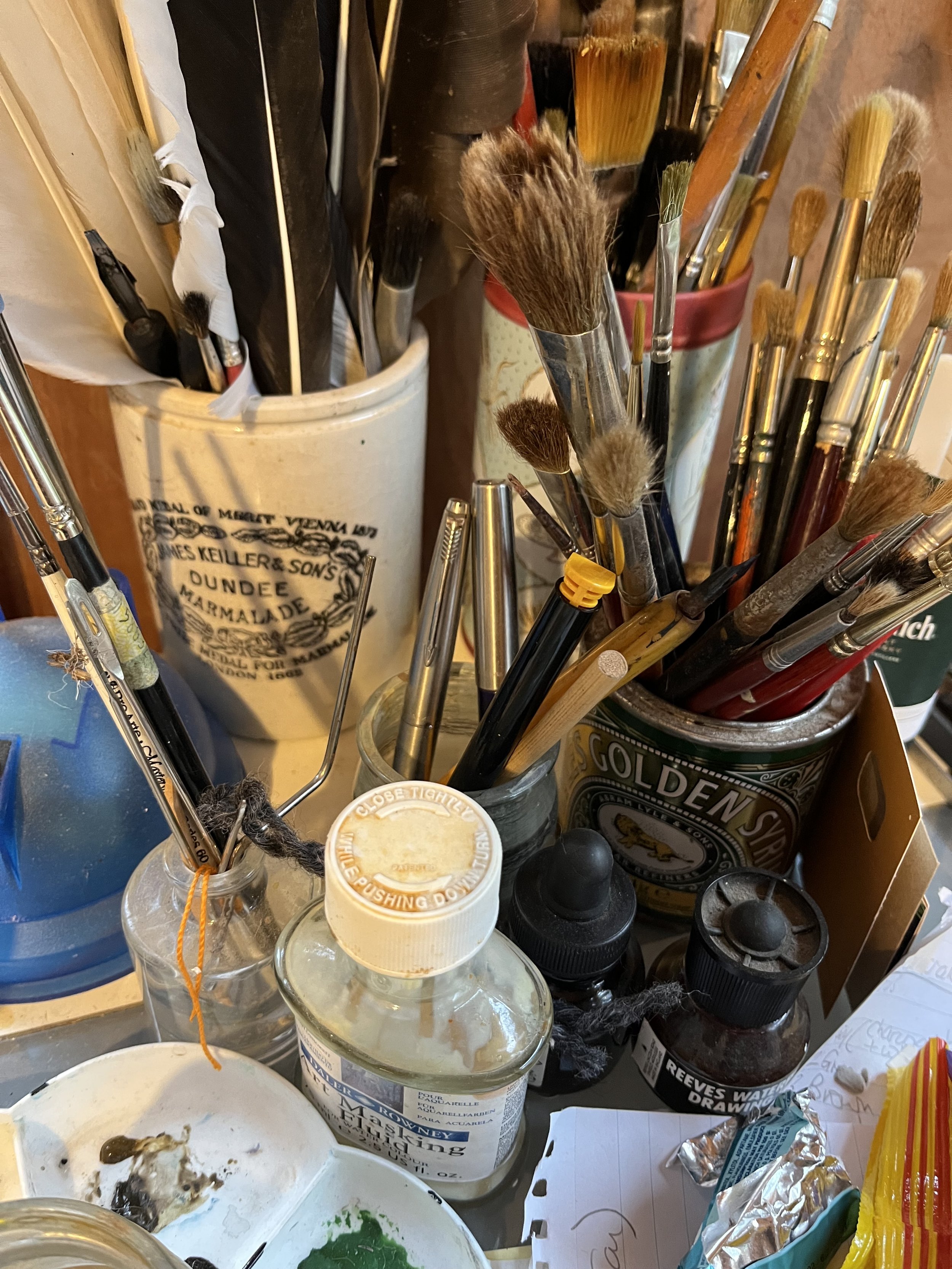
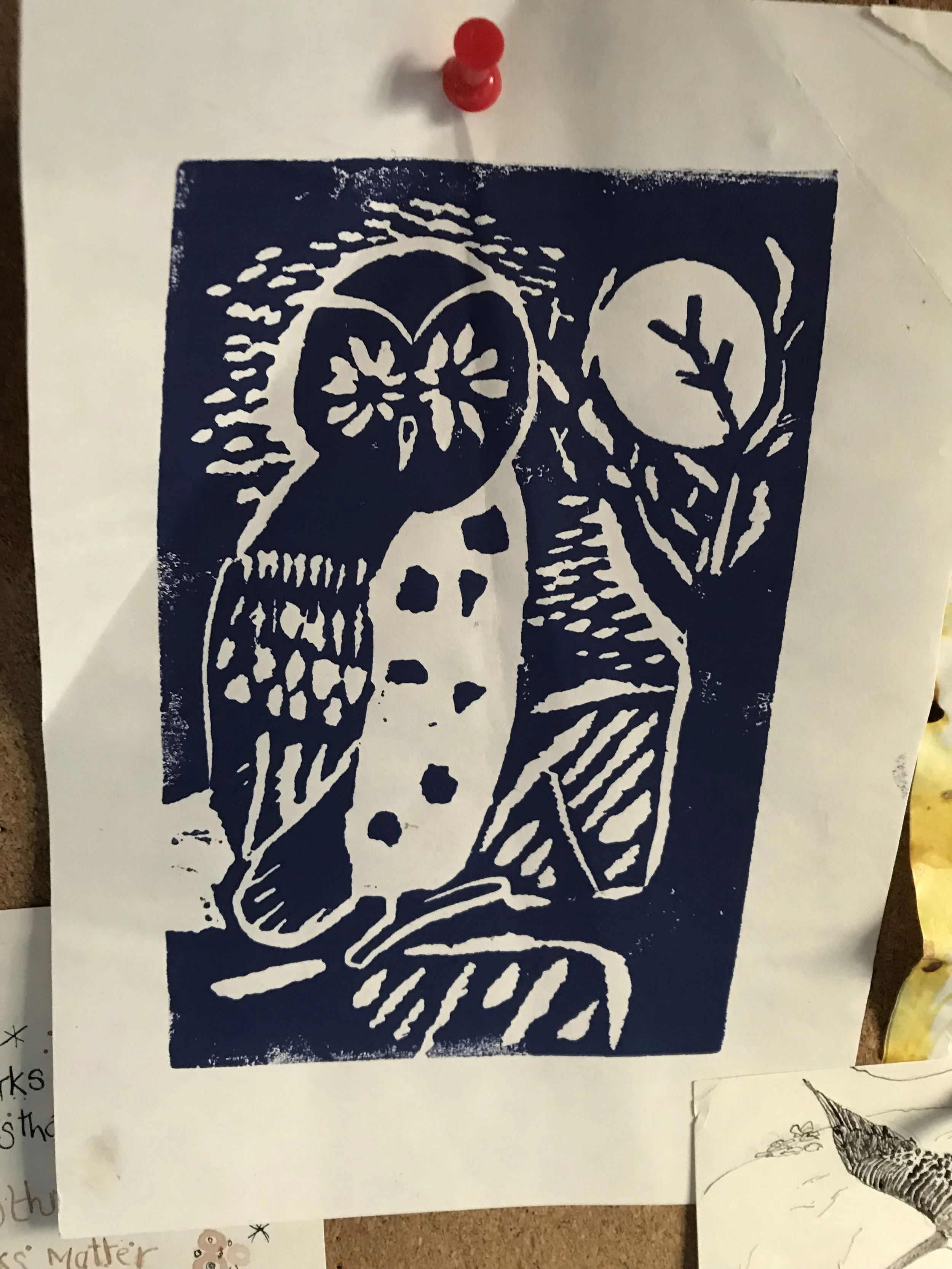
Link this to a degree in Biology, Geology and Art ( textiles and ceramics), an innate curiosity about the landscape, its history and our ancestral relationship with nature and you get to where I am today.
I get the same thrill from seeing the blue tits being acrobatic on the feeders at home to hearing the first Curlew or seeing the swallows return to our stables.
The project I am embarking on is one close my heart and home. Cherish is going to be a joint project exhibition with Hester Cox , printmaker, which explores endangered birds which are found in the Yorkshire Dales National Park ( YDNP). These birds can be found on the red and amber lists of the Birds of Conservation Concern 5 and Category 1 and 2 of the Nature Recovery Plan for the YDNP.
Birds and humans have always had a close relationship, be it for food or to mark the seasons or place. The Exeter Book was written down by a single scribe – no doubt a monk – in about 970 making it one of the oldest books to be written in old English and it contains riddles about birds. In Medieval and Tudor times, feasts often contained a large number and range of birds: swans, peacocks, multi bird roasts containingturkey, goose, duck, mallard, guinea fowl, chicken, pheasant, partridge, pigeon, and woodcock. Curlews, ducks, geese were hunted usually by falconry, and pigeons were kept in dovecotes for food . Michael J Warren’s book The Cuckoo’s Lea explores our relationship with birds through place names across the country. We have some great place names in the YDNP ; Throstle Nest Farm, Raven Crag, Dove Scar, Tewit Bogs, Cuckoo Hill and Falcon Cave to name a few. These sites were presumably associated with these birds and possibly named as navigation aids , easily recognisable landmarks for travellers. Are these birds still as prominent now in these places or have they moved on leaving only their name?
I would like to think my bronze age ancestors looked for the swallows return as I do, watch wrens forage around their dwellings, fed sparrows and tamed robins and listened for the returning curlew’s cry.
There are some sounds though my ancestors heard in the dales which I no longer can. The striking call of the summer corncrake which became lost to the ears of dales men and women in the 1940’s.
My research is about drawing together the past and the now – which birds are where and who would have heard what.