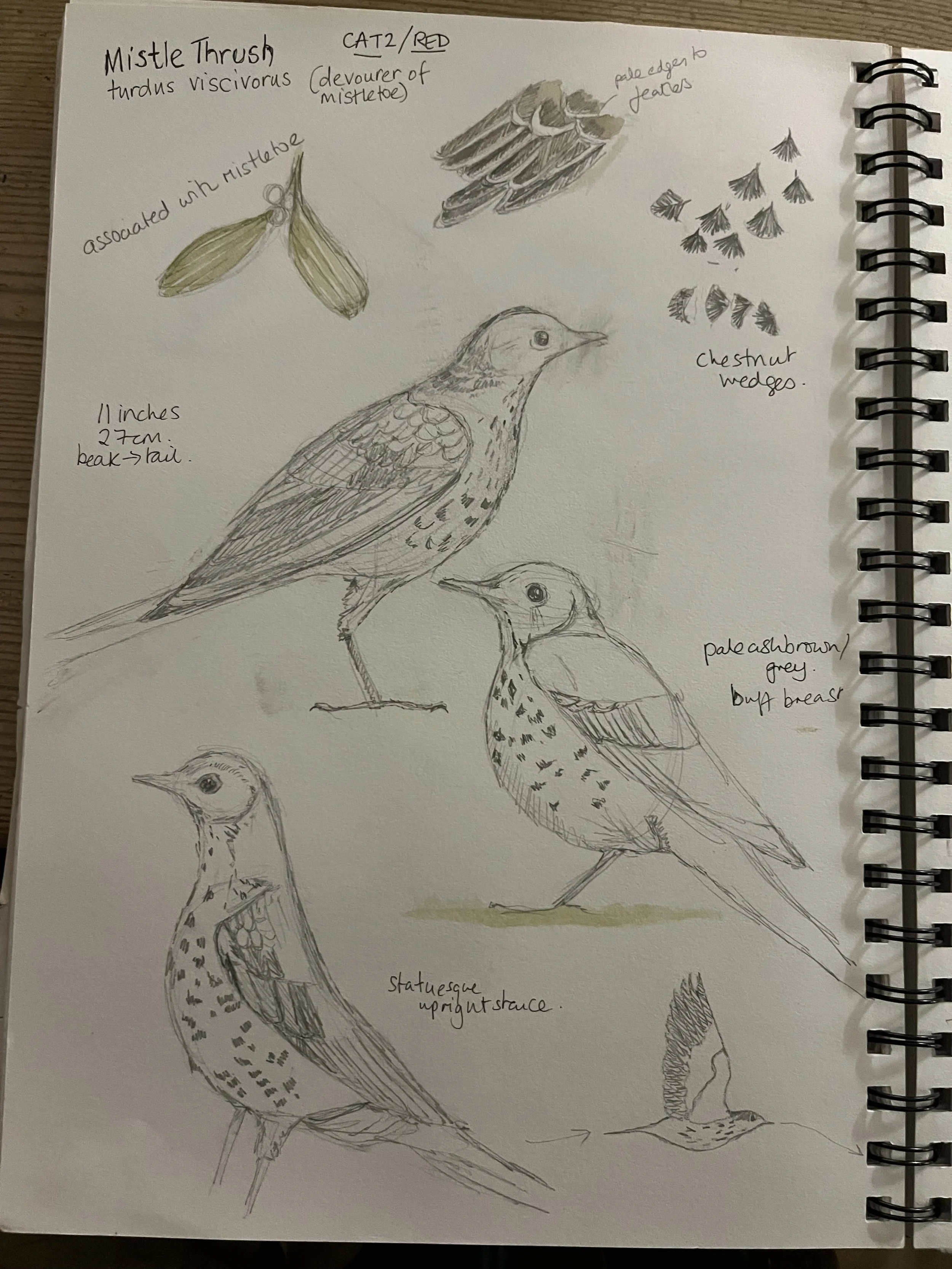
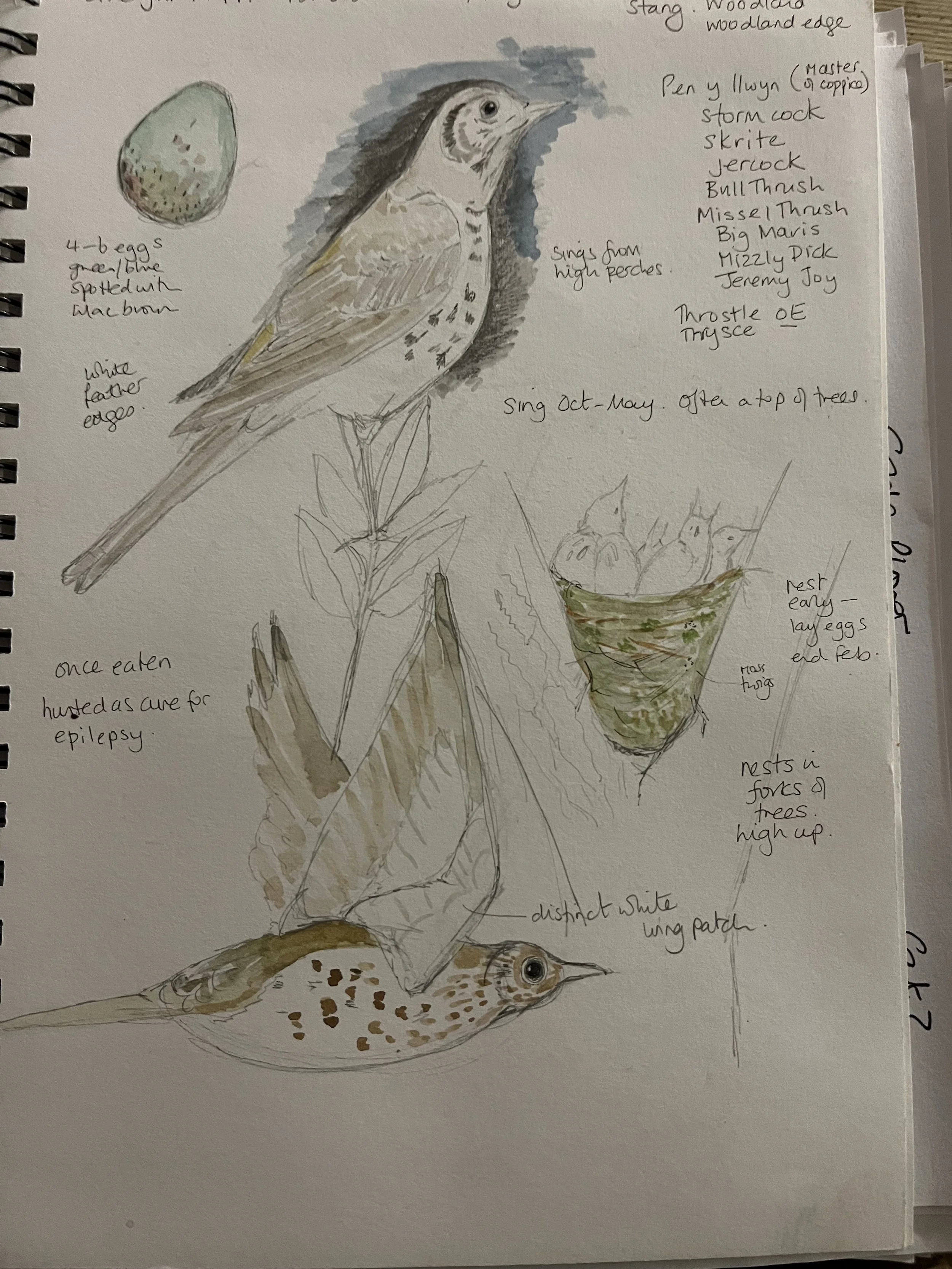
Mistle thrush. Red Listed.
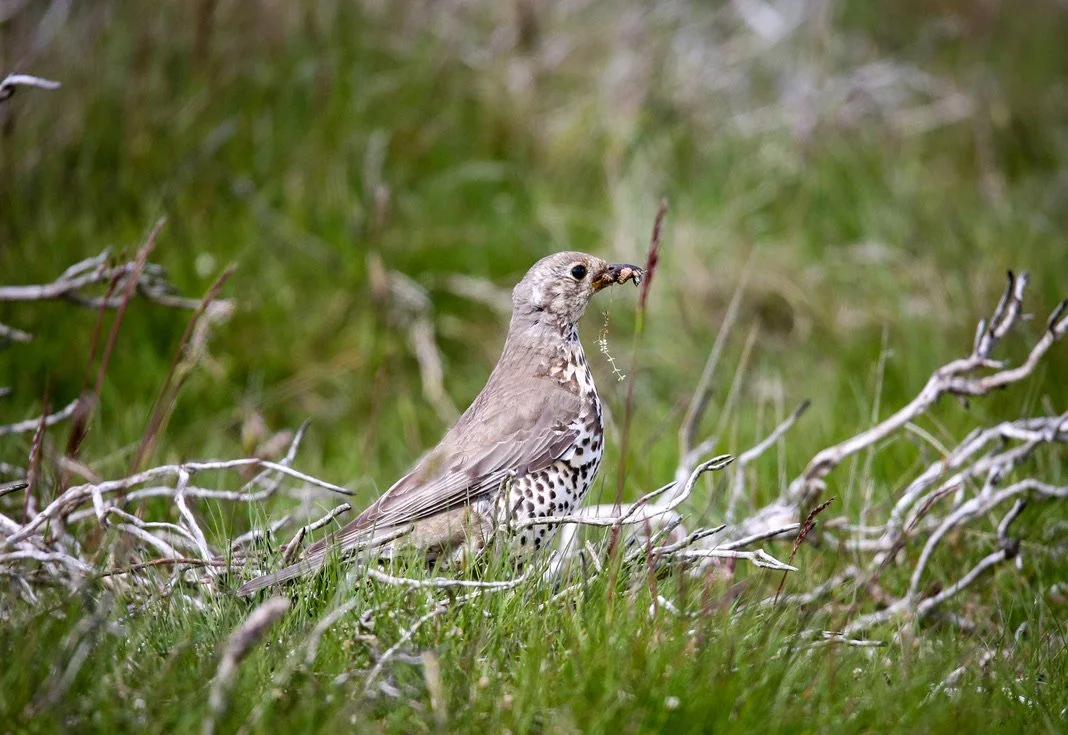
RTS photography
Saturday 3rd January 2013
Mistle Thrush – sentinel singing a melodic herald of spring. High up in a crooked ash tree the start of a nest – new birth regeneration foretelling the start of spring.
Mistle Thrushes have long been associated with humans, and this relationship is apparent in the varying names which they have been given ; Stormcock, skrite, jercock, missel thrush, mistletoe thrush , Big mavis, Jeremy joy , Mizzly dick, throstle, thrysce, scric, thrusshe,January Joy, Wood throstle, Rattle thrush , Golden thrush, Charlie cock, Curcock, Shercock, Hollincock ( Zool1848p2290), Norman thrush ( Swainson) depending on which part of the country and historical time , you encountered them. In Hampshire the Mistle Thrush was known as Bull Thrush owing to its boldness and size. The Welsh title Pen y Llwyn or ‘master of the coppice’ seems to reflect its woodland edge preference.
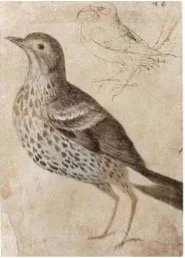
Mistle Thrush by Giovanni da Udine (1487–1564)
Mistle thrush “turdus, in English a thrusche, in German Throssel or a Mavis,
There are three kinds of Turdi, one of which is called the Viscivorus, since it feeds on naught but mistletoe and gum, and is of the size of a Pica.”
Taken from : TURNER ON BIRDS:A SHORT AND SUCCINCT HISTORY OF THE PRINCIPAL BIRDS NOTICED BY PLINY AND ARISTOTLE,FIRST PUBLISHED BY Doctor WILLIAM TURNER,1544.
So, these birds have been known , named and recorded for a long time ! The earliest record for the Mistle Thrush in Yorkshire is 1808 in History of Cleveland, and in 1844 by Thomas Allis, 1897 6th April in Wensleydale , a Mistle thrush nest was recorded.
“Sparrows and thrushes should be served with salt and cinnamon.” ( A History of English Food, Clarissa Dickinson Wright 2012).
This sounds a bit strange nowadays, but thrushes were part of the diet in the Middle Ages. Dale Serjeantson, in The Archaeology of Wild Birds of Britain and Ireland, states that ‘the throstle…might be any spotted member of the thrush family. The thrushes that feature on banquet menus could have been any or all of these “.( ie Song Thrush, Mistle Thrush, Fieldfare). In London in 1378 Three roast Thrushes would have cost you 2d and by the 18 th century thrushes were considered ‘ very wholesome and pleasant .’
“Mistle thrushes were a common songbird in England, both wild and kept in cages as pets. According to a medieval Latin proverb, thrushes spread the seeds of their own destruction because they ate mistletoe berries, a common ingredient in the birdlime used to catch them. They were also eaten in high status and ecclesiastical settings, perhaps as they were believed to be good for the health.” P5000_C51186_MistleThrush York Archaeology.
Given this close and long relationship with Mistle Thrushes it is sobering to see the following graph.
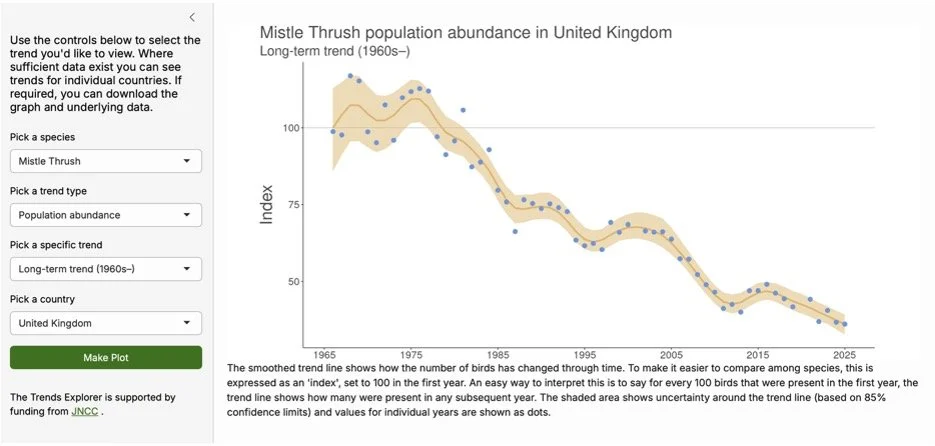
This data from the British Trust for Ornithology ( BTO) shows what a steep and stark decline these birds are facing. For me the graph is showing literally what has happened in my lifetime ,being born in 1964.
I see and hear mistle thrushes round our home most of the year. Their song is especially welcome in the colder winter months when they sing from treetops on the wood edge. The singing in times of bad weather lead to their name stormcock. These thrushes resource feed or guard berry laden bushes from other fruit eating competitors.
19th October 2014
A strong warm wind is blowing leaves across the lanes – drifts of golden yellow, copper and red. Raucous calls of thrushes as they flock in clouds on the berries of hawthorn bushes. A Mistle thrush, sentinel near the church, explodes noisily away.
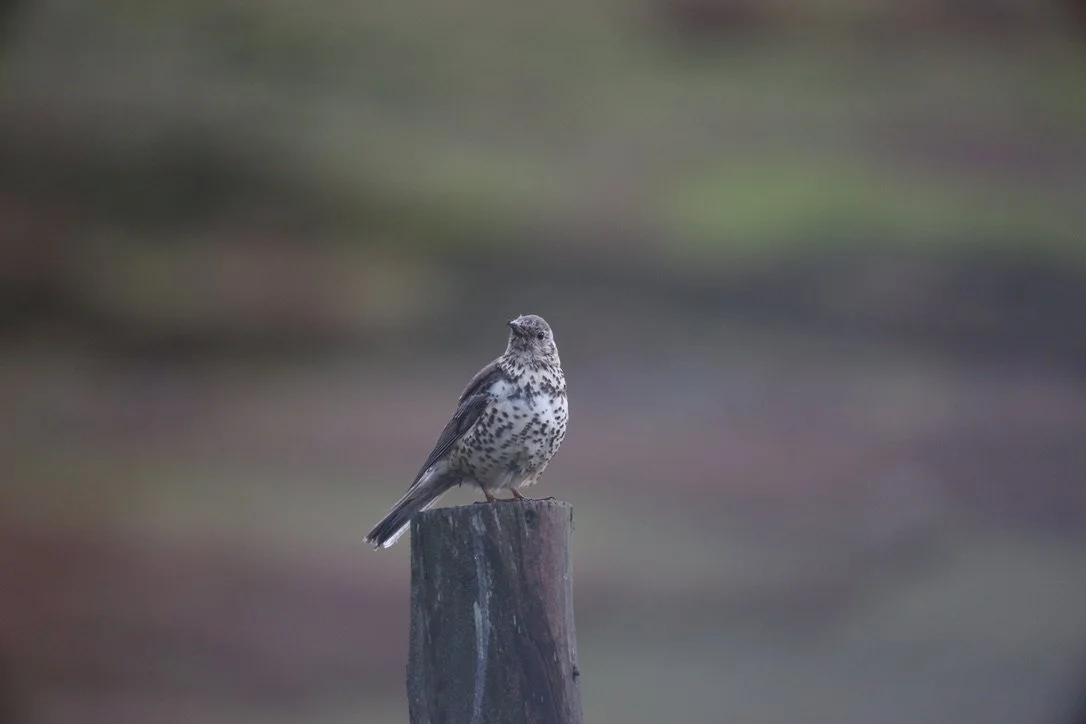
Photograph; RTS photography.
Mistle thrushes do eat mistletoe, but Victorians believed that for mistletoe to germinate it had to be “passed through the body of a mistle thrush “. Fortunately, that is not the case! Often when the mistletoe berries are being eaten by birds, they wipe their beaks on branches , as the berries are very sticky, they become embedded in the tree bark and germinate there. Turdus viscivorus, the latin name for mistle thrush means "thrush that devours mistletoe."
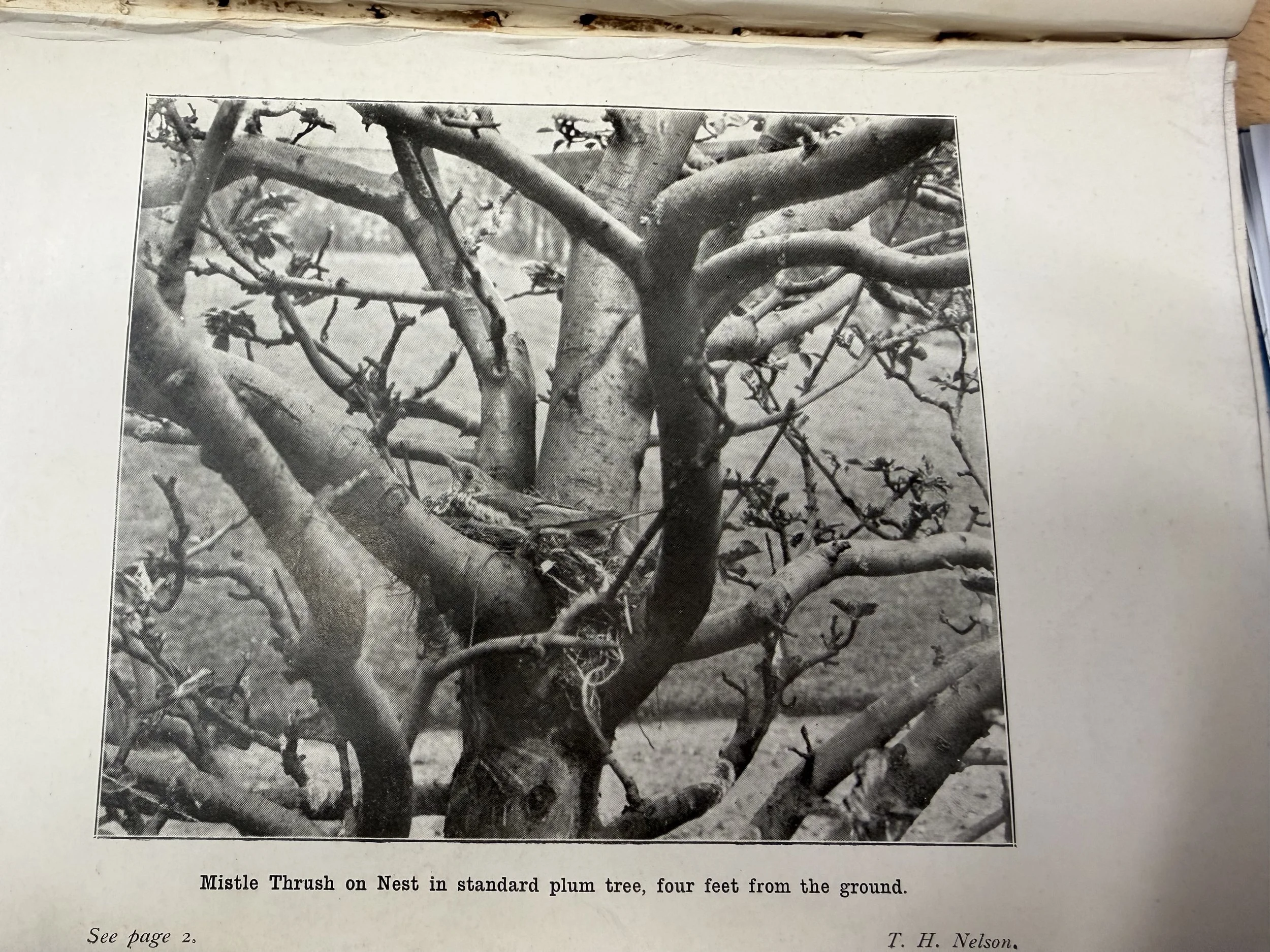
These large thrushes nest early in the year in the crooks of branches which are sparsely leaved , laying a clutch of five or six greenish eggs, intensely spotted with lilac and brown, as shown by the early photograph By T H Nelson 1907.
Across the Yorkshire Dales National Park, thrushes or rather the name throstle, are found in the following place names; Throstle Nest Barn, Throstle Nest Farm, Throstle Nest, Throstly Gill and Throstles’ nest. These names might refer however to the smaller Song Thrush, as apparently this term could be interchangeable between Mistle and Song Thrushes.
The work I have designed to represent our relationship with the thrush over time, will feature names, the bird and mistletoe and will be a two-block lino cut featuring reduction printing on both blocks – well that’s the theory!
All I have to do is make it now!