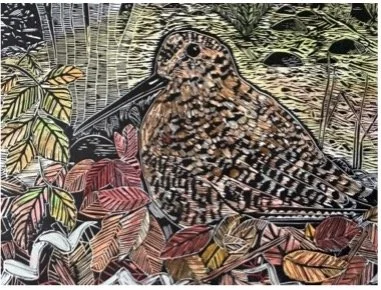
Wudecocc
The woodcock is a dumpy long billed wader bird which has mottled brown, beige and black plumage. The woodcock is a master of disguise being so well camouflaged when hunkering down in the leaf litter of a woodland they are incredibly hard to spot .
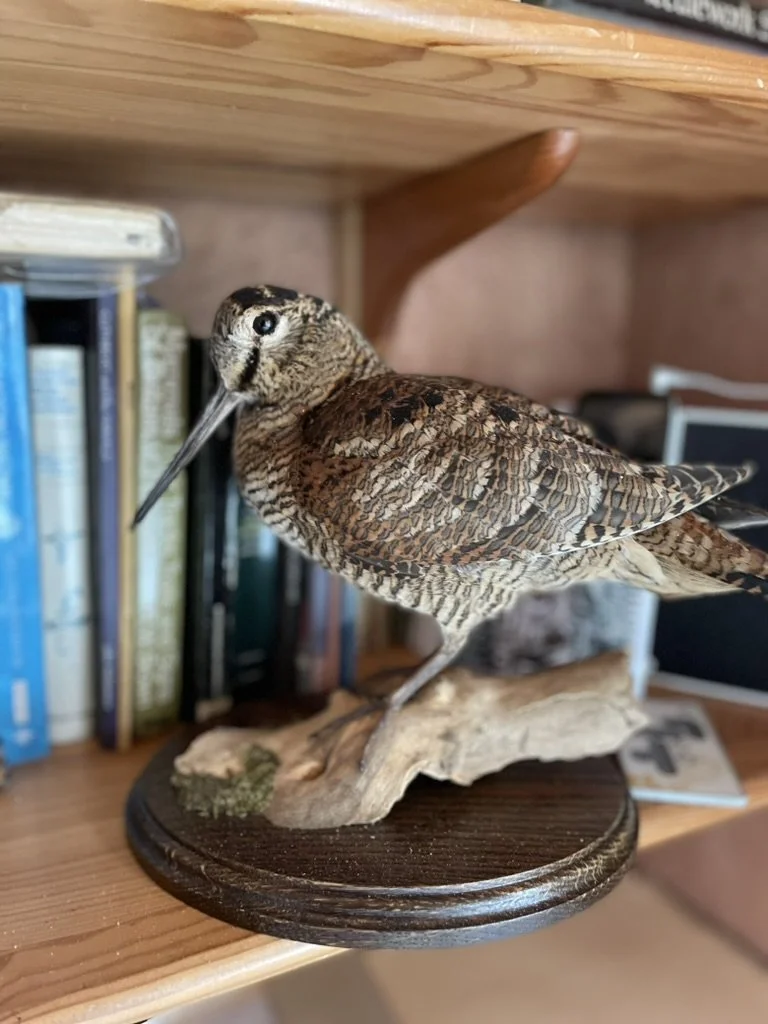
This woodcock now resides in my shed, having found it, on a dog walk in local woods. There was no visible mark but on closer inspection death was by two puncture wounds on its neck - probably by a stoat or weasel. This specimen shows clearly the beautiful patterning on the feathers .
An article by Josh Davis ( https://www.nhm.ac.uk/discover/news/2023/march/european-woodcocks-have-the-brightest-feathers-known-to-exist.html) shows they have an amazing quality to their feathers – unique in the bird world.
“The underside of their tails have feathers that are whiter than any others ever measured, a trick that is achieved through their fascinating structure….The team were able to measure the brightness of the white by using modern electron microscopy, spectrophotometry and optical modelling. The results showed that the reflectance of the woodcocks' white feathers were an astonishing 30% higher than any previously measured feathers. Detailed analysis of the feathers showed that it is a mixture of the solid structure of the feathers, the air pockets they contain, and the angle of the structures that all contribute to this brilliance.”
It is now believed because of the bird’s woodland habitat preference and their crepuscular nature, these feathers help with communication, especially when finding a mate in murky light. ‘So, one side of the woodcock feather is a lovely brown, mottled and great for forest hiding, and on the other side it's the brightest feather known to exist.'
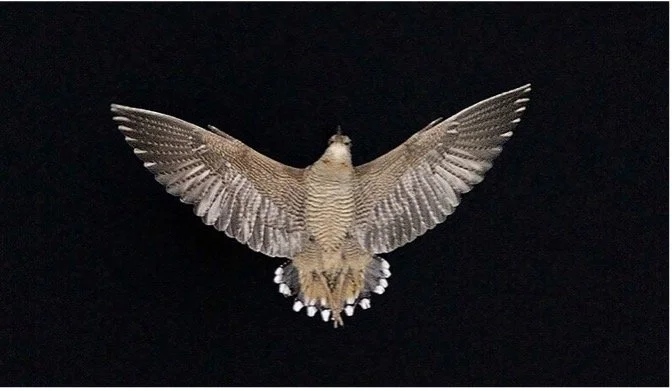
Photograph ©Jean-Lou Zimmermann
Despite is ability to hide in woodland leaf litter, the bird was a favourite to be hunted for food. Woodcocks tend to use favoured glades and forest rides in which to feed which made them easy to trap using sprynges, a kind of snare. Tudor accounts record that is cost 16d for 4 Woodcocks which is roughly £45 equivalent today or 3 days wages then for highly skilled craftsmen. In the archaeological records of bones, the most frequent bird found on medieval sites, mostly from religious houses or castles was the woodcock – as these people were those who could afford to buy them. Fothergill in 1799 notes that then a shot woodcock was worth 1/6 d.
Woodcocks were cooked and eaten whole ie with the head and innards intact and regarded as a delicacy. After the Norman conquest woodcocks could only be caught under licence so this was one way the poor could get some revenue.
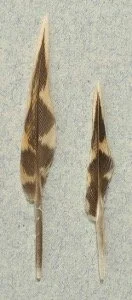
The additional reason that many monasteries favoured woodcock is that the pin feathers were prized, and still are, by artists for drawing illuminated manuscripts. As there are only 2 pin feathers on every mature woodcock, one on each wing, they are rare and highly valued.
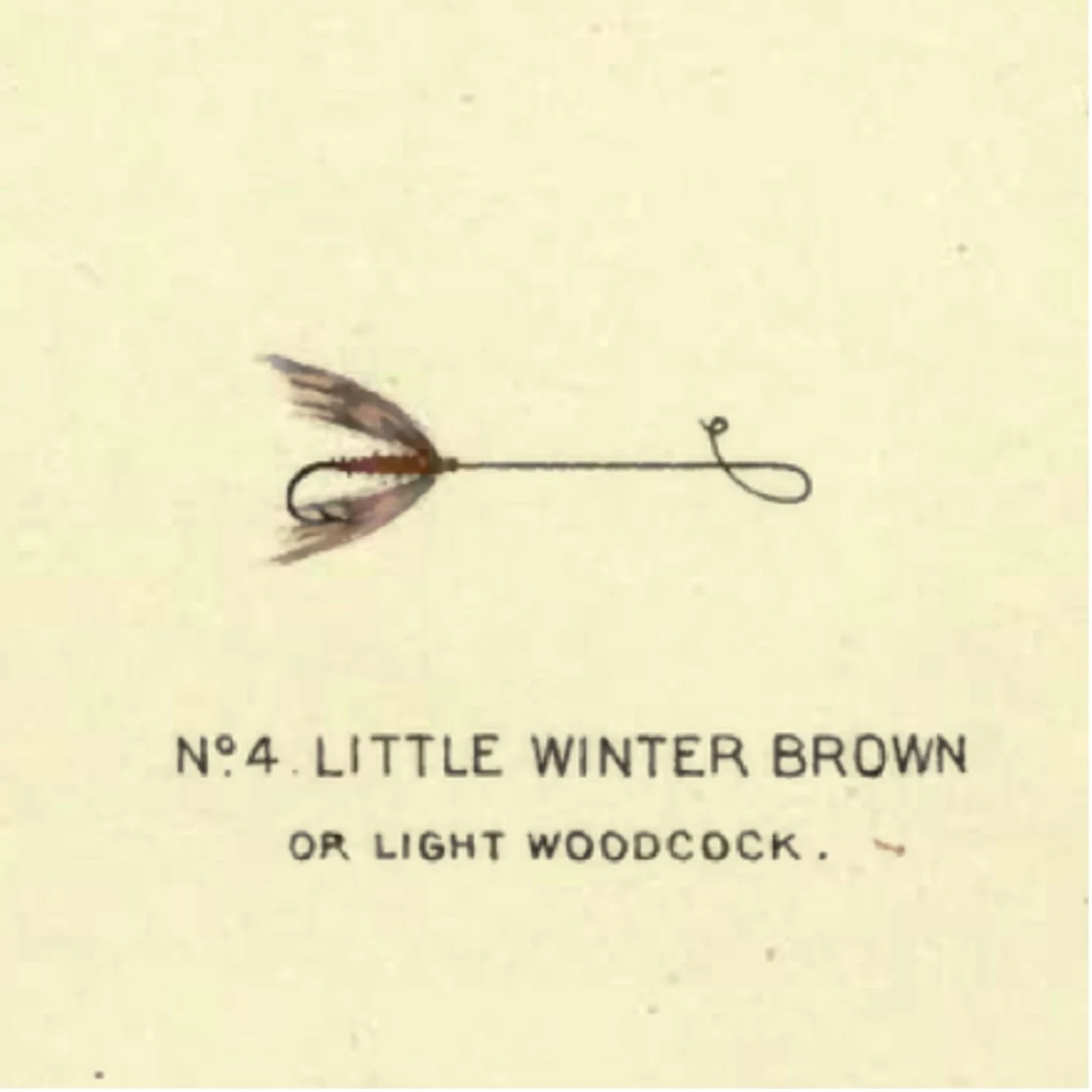
In T.E. Pritts Yorkshire Trout Flies 1885, he describes the making of different fishing flies according to the seasons. The ‘Little Winter Brown’ (No. 4. LITTLE WINTER BROWN or LIGHT WOODCOCK. Hook 1 .WlNGS. Hackled with a feather from the inside of a Woodcock's wing. BODY. Orange silk, with a spare dubbing of Hare's ear. Jackson recommends for the later dressing a feather from a hen pheasant's wing, but the above is quite as good) and “Grey Midge’ (No. 41. GREY MIDGE. Hook O.WINGS. Hackled with a feather from a Woodcock's breast BODY. Yellow silk.HEAD. Peacock herl. Kills best on warm days, and summer evenings.) both require feathers from a woodcock in order to make the fly.
The names for woodcock in old texts have changed ; wudecocc ( OE) , wuduhana, wudasnite, holthana, hracge. However, it would appear that the bird itself therefore has had a long and close association with humans, to be named so consistently over time.
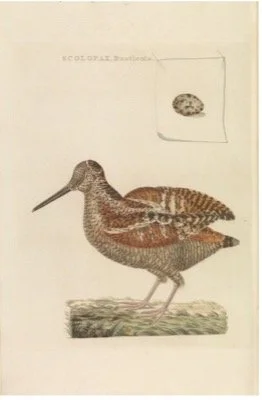
Plate from the Nederlandsche vogelen (1770-1829)
In Turner On Birds: A Short And Succinct History Of The Principal Birds Noticed By Pliny And Aristotle First Published By Dr. William Turner, 1544 the following extract is found on the woodcock ;
“Woodcock in English a wod cok The Gallinago is taken among the hedges of our gardens; it is of the size of a Gallina, but has a long bill, and the colour of the Attap-ena : it runs with speed, while it is wonderfully fond of man. This bird never sits on a tree and it nests on the ground. Woodcocks are never seen with us save in the winter, wherefore I have naught to say about their young or mode of nesting. They are chiefly caught in England in the woods at daybreak and at dusk, by means of nets hung in some place devoid of trees, and dropped when the bird comes.”
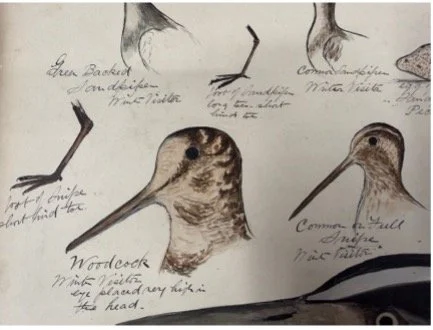
This early observation may link to the spectacle known as a ‘fall’ of woodcock. This ‘fall’ happens when in autumn birds from Scandinavia and Russia migrate to our shores to over winter. Eating beetles, worms and insects, the woodcock needs soft unfrozen ground in which to feed, so these birds migrate here when there own feeding areas become inhospitable. As a nod to these phenomena the last full moon in October or first full moon in November is called the Woodcock moon , where it is believed the ‘fall’ corresponds to as the birds prefer to travel at night. The detail from a Victorian teaching aid ( Dales Countryside Museum shows the woodcock as a winter visitor)
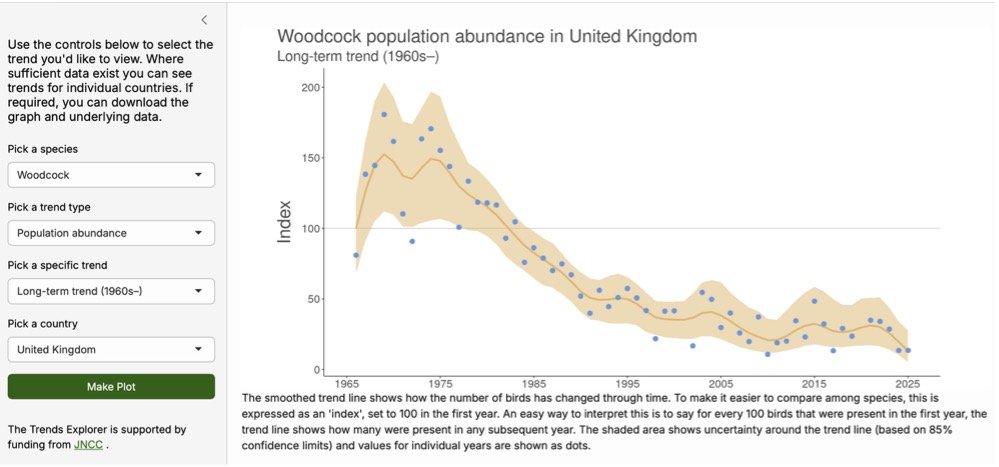
The BTO graph below shows a steady decline in the species and this is possibly due to the woodland practices and less coppicing, use of pesticides etc which kill the invertebrates they feed on and disturbance in general.
Woodcocks as we have established are dwellers for woods and forests. The wood local to my studies of the bird is Freeholders wood a wood semi ancient but coppiced wood from at least the 1600’s but maybe earlier. Coppicing is tree management where trees and managed by cutting them, usually hazel but not exclusively, and allowing regrowth. The sticks cut were use for making hurdles, firewood and for buildings. Hazel grows quickly and so can be harvested on a 7-year cycle.
Residents of Carperby still have the right of Estovers; the ancient right allowing residents to take small wood for fuel or cut poles. The YDNP purchased the wood in 1982 and have restored a 14–16-year coppicing cycle. It is a nature reserve and SSSI to protect its native flora and fauna.
In the 1500’s these ‘forests’ were mainly used as hunting grounds .This time also saw Sycamore trees introduced as ornamental trees for the landowners. However, they quickly spread into native woodlands .
Near to Freeholders wood a hoard of Tudor coin clippings were found. Coin clipping was illegal but as the value of currency had become debased, due to the large expenditures by Henry V111, this illegal practice took hold. The nearby hoard was probably hidden well due to its illegal nature and then never recovered.
My piece reflects all the information above but hopefully also considers the Tudor styles of painting at the time too. Tudor paintings were ‘flat’ and highly detailed often painted onto oak panels rather than canvas. Many paintings especially in the reign of Elizabeth 1 contained a lot of coded symbolic imagery which included a lot more natural form.
My lino cut shows a woodcock in a coppiced wood with a hidden hoard of coin clippings in the leaf letter. ( see detail shown). The autumn woodcock moon shining down. It is printed on firm handmade paper to represent the wooden oak boards usually chosen.